Pasta e Fagioli: A Cozy Italian Soup Worth Making at Home
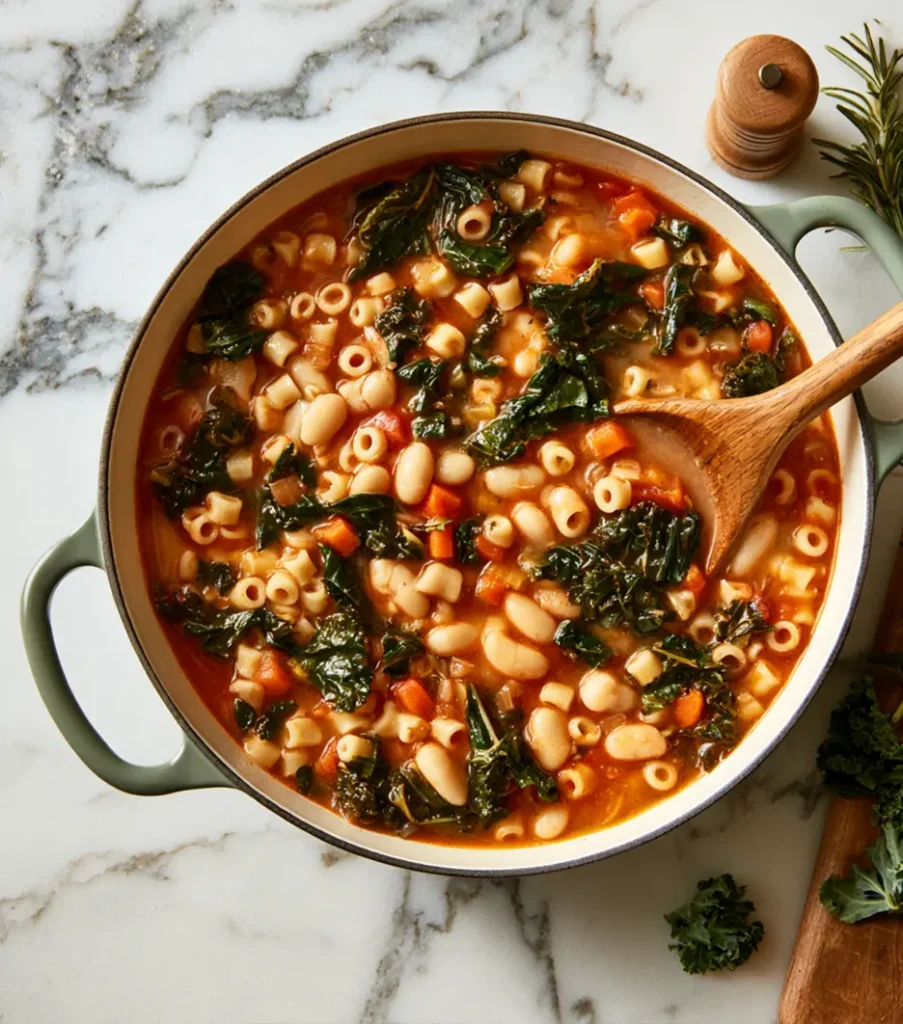
Pasta e fagioli (sometimes shortened to “pasta fagioli,” or jokingly called “pasta fazool” by fans of certain mob movies) is a classic Italian soup whose name simply means “pasta and beans.” At its heart, it’s a humble, rustic dish built from tender small pasta, creamy beans, and soft vegetables simmered together in a fragrant tomato-based broth. While the original Italian versions often rely on fresh cranberry beans, most home cooks today use canned cannellini beans, which are widely available and just as delicious.
In the United States, many people first encounter pasta e fagioli on the menu of a well-known Italian-American chain restaurant. But this soup deserves a place in your own kitchen rotation, not just on a restaurant menu. It’s a one-pot meal, it leans heavily on pantry staples, and the combination of starch, protein, and vegetables makes it satisfying enough to stand on its own as dinner. It’s the kind of dish that feels like a warm hug in a bowl, perfect for a chilly evening when you want something comforting without a long ingredient list or complicated technique.
Ingredients
To make a hearty pot of pasta e fagioli, you’ll want to gather:
- Small pasta – Ditalini is the traditional choice, though small elbow macaroni or any other tiny pasta shape works just as well.
- Beans – Canned cannellini beans are the easiest option and give the soup its creamy texture.
- Extra-virgin olive oil – For sautéing the vegetables and adding richness.
- Aromatic vegetables – Onion, garlic, carrots, and fennel (or celery, if you’re not a fan of fennel’s mild licorice flavor) form the flavor base of the soup.
- Tomato paste – This thickens the broth and intensifies the tomato flavor.
- Fresh rosemary – Adds a piney, cozy aroma. Dried rosemary, oregano, or basil can substitute in a pinch.
- Diced tomatoes – They bring sweetness and acidity to balance the broth.
- Vegetable broth – The liquid base that ties everything together.
- A Parmesan rind – An optional but worthwhile addition that deepens the savory flavor as it simmers (skip it, or use a vegetarian-friendly rind, depending on your dietary needs).
- Leafy greens – Kale or Swiss chard aren’t strictly traditional, but they add color, nutrition, and a nice textural contrast.
- Red pepper flakes – For a gentle kick of heat.
- Salt and pepper – To season throughout.
Nothing here is exotic — most of it can be found in a well-stocked pantry and produce drawer, which is part of what makes this soup so approachable for a weeknight.
How to Prepare It
Making pasta e fagioli is refreshingly straightforward and comes together in roughly an hour, most of which is hands-off simmering time.
Start with the vegetables. Warm olive oil in a large soup pot or Dutch oven over medium heat. Add the chopped onion, carrots, and fennel (or celery), along with a pinch of salt and some black pepper. Let these cook slowly, stirring now and then, for about 10 to 15 minutes, until they’re completely softened. This slow sauté is what builds the soup’s flavorful foundation, so don’t rush it.
Bloom the aromatics. Stir in the grated garlic, tomato paste, and chopped rosemary. Cook this mixture for just a minute, stirring constantly so the garlic doesn’t burn and the tomato paste starts to deepen in color and flavor.
Build the broth. Pour in the diced tomatoes along with their juices, then add the beans, vegetable broth, and the Parmesan rind if you’re using one. Bring everything to a simmer and let it bubble gently for about 20 minutes, giving the flavors time to meld together.
Add the pasta. Stir in the small pasta and continue simmering for another 10 minutes or so, until the noodles are al dente. Keep an eye on it here, since pasta can go from perfectly tender to mushy quickly.
Finish with greens and heat. Add the torn kale or chard along with a pinch of red pepper flakes. Cook just until the greens wilt down, then taste and adjust the seasoning with more salt and pepper as needed.
Ladle the finished soup into bowls and top with extra red pepper flakes, a sprinkle of fresh parsley, and freshly grated Parmesan if you like. It pairs beautifully with a slice of crusty bread for soaking up the broth, or alongside a simple green salad for a fuller meal.
Why You’ll Love It
There’s a lot to love about this soup beyond its comforting flavor. First, it’s incredibly economical — nearly every ingredient is a shelf-stable pantry item or an affordable vegetable, which makes it a budget-friendly option for feeding a family or meal-prepping for the week. Second, it’s a genuinely one-pot dish, meaning cleanup is minimal and you don’t need any fancy equipment beyond a large pot.
It’s also wonderfully adaptable. Vegetarians can easily make it fully plant-based by skipping the Parmesan rind, while others can add cooked sausage or ground meat for a heartier version. The soup is naturally filling thanks to the combination of pasta, beans, and vegetables, so it works as a complete meal rather than just a starter. And because the flavors only improve as they meld, leftovers the next day are often even better than the first serving.
Finally, this is a dish that feels nourishing without being fussy — the kind of recipe you can turn to again and again, whether you’re cooking for a crowd or just want a big pot of something warm for the week ahead.
Tips
- Don’t rush the vegetable sauté. Letting the onion, carrots, and fennel cook low and slow for a full 10 to 15 minutes builds a much deeper flavor base than rushing them over higher heat.
- Cook the pasta separately if meal-prepping. Pasta absorbs liquid the longer it sits, so if you plan to eat the soup over several days, boil the pasta on its own and stir it in individually when serving to keep it from turning mushy.
- Freeze it without the pasta. The soup base freezes well for up to about three months, but pasta doesn’t hold up well to freezing and thawing. Add freshly cooked pasta when you reheat a frozen batch.
- Swap vegetables based on what you have. No fennel? Celery is a fine substitute. No kale? Swiss chard or even spinach works in its place.
- Don’t skip the Parmesan rind if you can help it. Even a small piece simmered in the broth adds a subtle umami depth that’s hard to replicate otherwise.
- Store leftovers properly. Keep the soup in an airtight container in the refrigerator for up to two days, keeping in mind the pasta will continue to soak up broth as it sits.