Thai Red Curry: A Weeknight Dinner That Beats Takeout
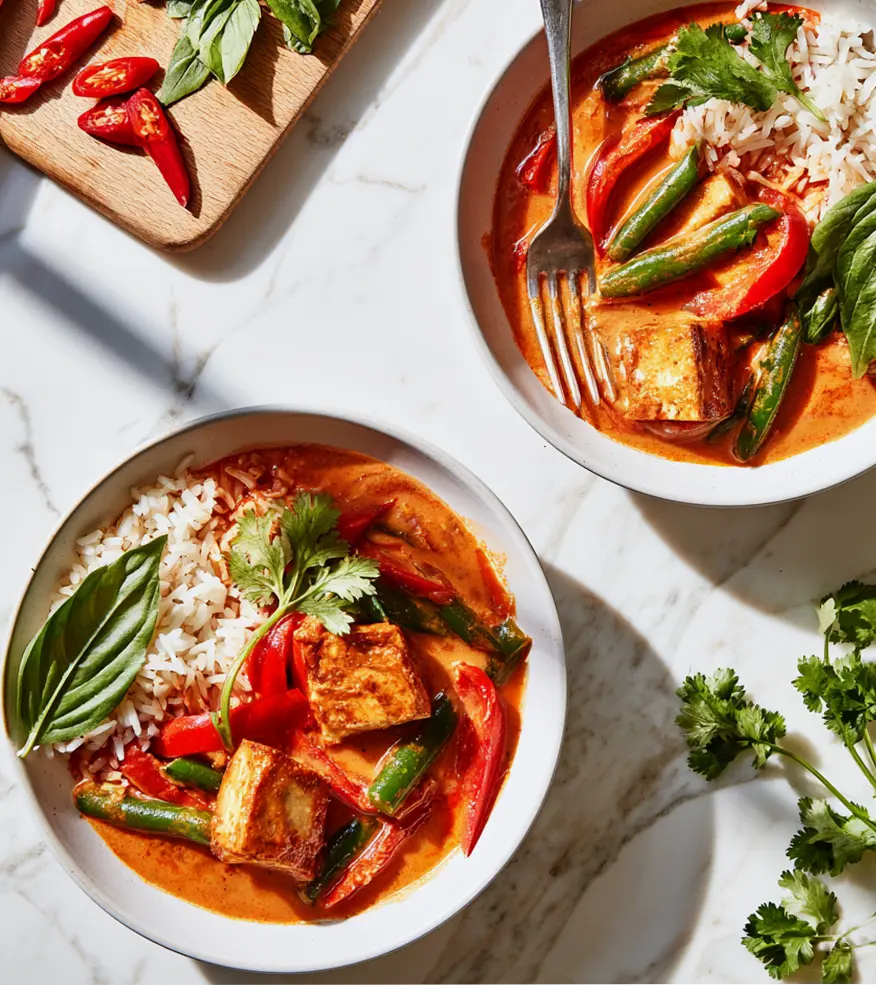
Thai red curry is a warm, fragrant coconut-based dish built around a jarred red curry paste, simmered vegetables, and a splash of citrus to brighten everything up. It’s the kind of meal that tastes like it took hours of effort but actually comes together in under 30 minutes on a single stovetop burner. Instead of waiting on delivery from your local Thai spot, this version lets you recreate that same craveable combination of tender-crisp vegetables, silky tofu, and a rich, spiced coconut broth right in your own kitchen. It’s a vegetarian-friendly, easily adaptable dinner that works equally well as a quick weeknight meal or a make-ahead lunch, since the flavors actually deepen and intensify after a day in the fridge.
What makes this curry approachable rather than intimidating is its reliance on store-bought curry paste. Rather than building a curry base from scratch with a dozen individual spices and aromatics, you’re leaning on a small jar that already packs in red chiles, garlic, lemongrass, galangal, kaffir lime, and coriander. That shortcut is what keeps the ingredient list short and the cooking time fast, without sacrificing depth of flavor.
Ingredients
To make this curry, you’ll need a handful of pantry staples and fresh produce:
- Coconut oil, for sautéing
- White onion, thinly sliced
- Sea salt
- Red bell pepper, sliced into strips
- Fresh ginger, chopped
- Red curry paste (a couple tablespoons)
- Full-fat canned coconut milk
- Water, to thin the sauce slightly
- Tamari, for savory depth
- Cane sugar, to balance the flavors
- Fresh green beans, trimmed
- Bamboo shoots, drained
- Fresh lime juice, plus extra wedges for serving
- Baked tofu (optional, for added protein)
- Fresh basil and cilantro, for garnish
- Thai chiles, sliced, for a spicy garnish
- Cooked jasmine rice, for serving
When shopping for curry paste, check the label carefully if you’re vegetarian, vegan, or avoiding shellfish — some brands include fish sauce or shrimp paste as a base ingredient, while others are entirely plant-based.
How to Prepare It

This dish really only involves three stages: sauté, simmer, and finish.
Start with the aromatics. Heat coconut oil in a large, deep skillet over medium heat. Add the sliced onion along with a pinch of salt, and cook until it turns soft and translucent, about three minutes. Stir in the red bell pepper and cook for another couple of minutes until it just begins to soften. Then add the ginger and curry paste directly to the pan, stirring constantly for about two minutes. This step is where the kitchen starts to smell incredible, as the paste’s spices bloom in the hot oil.
Move into the simmer stage. Pour in the coconut milk and water, then stir in the tamari, sugar, green beans, and bamboo shoots. Bring everything to a gentle simmer and let it cook for around ten minutes, just until the green beans turn tender but still keep a slight snap.
Finish and serve. Take the pan off the heat, then stir in fresh lime juice along with tofu if you’re using it. Taste and adjust with extra salt, tamari, sugar, or lime juice until the balance feels right to you. Ladle the finished curry over jasmine rice, and top with fresh basil, cilantro, and sliced Thai chiles for a final pop of color, herbaceousness, and heat. A lime wedge squeezed over the top right before eating adds one more layer of brightness.
Why You’ll Love It
This curry checks every box for an easy, satisfying dinner. It comes together start to finish in half an hour, which makes it realistic for busy weeknights when takeout starts to feel like the only option. Despite the short cooking time, the layered use of aromatics, coconut milk, and citrus gives it a complexity that tastes far more involved than the actual effort required.
It’s also wonderfully flexible. The vegetable combination here is really just a suggestion — you can swap in whatever you have on hand or whatever’s in season. The tofu is optional too, so the recipe adapts easily whether you’re cooking for vegetarians, vegans, or omnivores looking to add some plant-based protein into the mix.
Leftovers are arguably even better than the first serving. As the curry sits in the fridge, the spices and aromatics continue to meld, making day-two lunch taste even richer and more developed than the night it was made.
Tips for the Best Results
- Don’t skip the sugar. It might seem like an odd addition to a savory dish, but the touch of sweetness is essential for rounding out the curry paste’s heat and the tamari’s saltiness. Without it, the sauce can taste flat or one-dimensional. If you prefer a less processed option, coconut sugar works as a swap.
- Feel free to swap vegetables. Snap peas, snow peas, julienned carrots, broccoli florets, chopped cabbage, or even a handful of spinach all work beautifully in place of or alongside the green beans and bamboo shoots. If you use a denser vegetable like butternut squash, plan on a longer simmer time to let it cook through.
- Watch the spice level. Curry paste brands vary widely in heat, so start with a smaller amount if you’re unsure, then build up gradually. You can always cut heat at the end by stirring in a bit more coconut milk.
- Store leftovers properly. Keep any extra curry in an airtight container in the refrigerator for up to three days. Reheat gently on the stovetop or in the microwave — the flavors will have only gotten better with time.
- Finish with acid. A final squeeze of fresh lime juice right before serving brightens the whole dish and keeps the richness of the coconut milk from feeling heavy.