Baked Dijon Salmon: A Weeknight Dinner That Tastes Like a Splurge
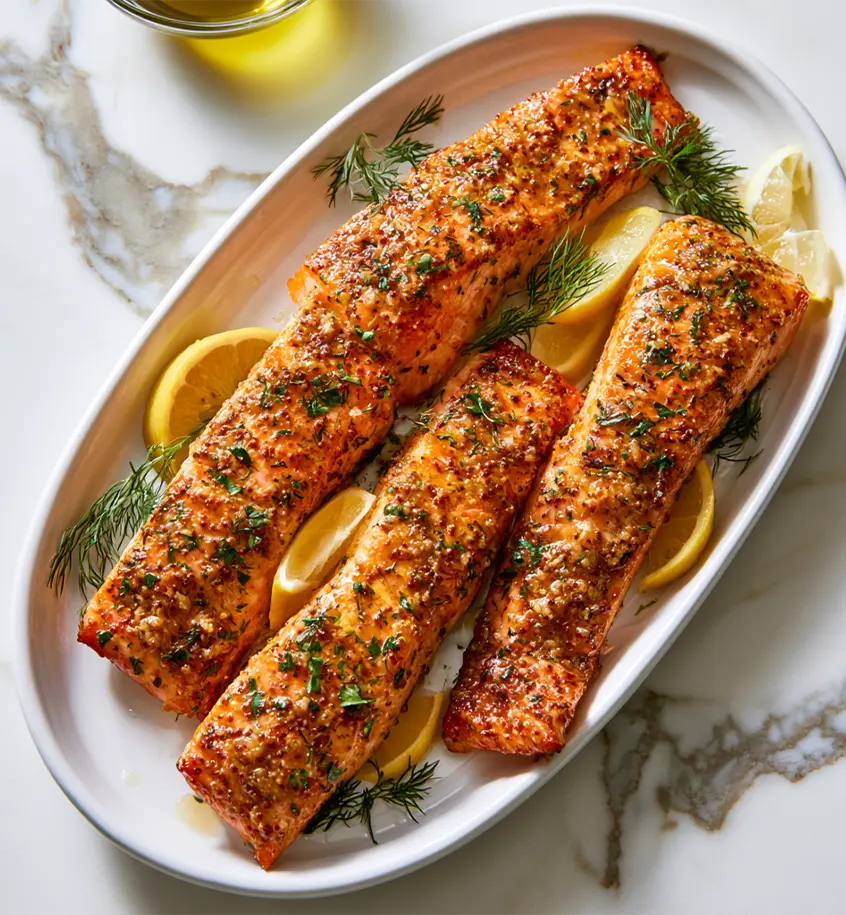
Baked Dijon Salmon is a simple oven-roasted fish dish where salmon fillets are coated in a tangy, slightly sweet mustard glaze and baked until they turn flaky and golden. The magic is in the glaze: Dijon mustard brings sharpness, honey rounds it out with sweetness, and a splash of lemon juice keeps everything bright instead of heavy. Baked at a high temperature, the coating caramelizes on top of the fish, creating a sticky, flavorful crust while the inside stays tender and moist.
This isn’t a recipe that requires any special skill or unusual ingredients. It’s the kind of dish that regularly shows up on restaurant menus, yet it comes together with pantry staples and less than half an hour of your time. Whether you’re cooking for a busy weeknight or want something a little more polished for guests, this salmon delivers big flavor without big effort. It’s also a great entry point if you’ve always felt intimidated by cooking fish at home, since the method is nearly foolproof.
Ingredients
You only need a handful of items to make this dish work, and most of them are things you probably already have in your kitchen:
- Salmon fillets – Choose pieces that are similar in thickness so they cook at the same rate. Richer, fattier cuts like king salmon or sockeye tend to stay juicier in the oven, though a good sustainably sourced Atlantic salmon works well too.
- Dijon mustard – This is the backbone of the glaze. Its creamy texture and peppery bite pair beautifully with the richness of the fish. Regular yellow mustard won’t give you the same depth of flavor, so it’s worth sticking with Dijon.
- Honey – Just a small amount to soften the mustard’s sharp edge and add a subtle sweetness.
- Fresh lemon juice – This keeps the glaze from feeling one-note and adds a fresh, citrusy lift that balances the richness of the salmon.
- Olive oil – Helps loosen the glaze so it spreads easily, while also helping the fish stay moist as it bakes.
- Garlic – Minced finely so it melts into the sauce and infuses every bite with flavor.
- Salt and pepper – To season everything to taste.
- Fresh herbs – Parsley or dill, sprinkled on at the end, add a pop of color and freshness.
How to Prepare
Making this dish is genuinely simple, and you can have it on the table in about 20 minutes.
- Preheat your oven to 400°F and line a baking sheet with parchment paper or lightly grease it.
- Mix the glaze. In a small bowl, whisk together the Dijon mustard, honey, lemon juice, olive oil, minced garlic, salt, and pepper until smooth.
- Coat the salmon. Arrange the fillets skin-side down on the prepared baking sheet, then spoon the glaze generously over the top of each piece, making sure it’s evenly covered.
- Bake. Slide the tray into the oven and bake for 12 to 15 minutes, or until the salmon flakes easily with a fork and reaches an internal temperature of around 135°F at its thickest point.
- Garnish and serve. Finish with a sprinkle of fresh parsley or dill, then serve immediately while it’s warm.
That’s it — no marinating time, no complicated steps, and minimal cleanup.
Why You’ll Love It
There’s a lot to appreciate about this recipe beyond how good it tastes. First, it’s incredibly fast. From start to finish, you’re looking at roughly 20 minutes, which makes it perfect for busy weeknights when you want something homemade but don’t have hours to spend in the kitchen.
Second, it feels special without requiring special effort. The glossy, caramelized glaze makes the salmon look like something you’d order at a nice restaurant, but the ingredient list and technique are about as beginner-friendly as it gets. If you’ve never cooked fish before, this is a great place to start, since it’s genuinely hard to mess up.
Third, it’s a healthier option that doesn’t sacrifice flavor. Salmon is naturally rich in protein and heart-healthy fats, and this preparation keeps things light while still delivering a satisfying, flavorful meal. The glaze uses natural sweetness from honey rather than heavy sauces or excess sugar, so you get big taste without a lot of added calories.
Finally, it’s endlessly adaptable. You can dress it up with different herbs, swap the citrus, or add a bit of heat, making it a recipe you can return to again and again without it feeling repetitive.
Tips
- Pick fattier cuts of salmon. Fattier fish, like king salmon or sockeye, are naturally more forgiving in the oven and less likely to dry out.
- Don’t let the glazed salmon sit before baking. The acid in the lemon juice will start to “cook” the fish if it sits too long, which can make the texture rubbery. Glaze it right before it goes into the oven.
- Skip the foil. Baking uncovered lets the glaze caramelize properly. Covering the salmon would trap steam and prevent that sticky, golden coating from forming.
- Pull it out slightly early. Salmon continues cooking after it leaves the oven, so aim for an internal temperature just under your target to avoid overcooking.
- Switch up the citrus. Lime juice makes a nice substitute for lemon if you want a slightly different flavor profile.
- Add some heat. A pinch of red pepper flakes mixed into the glaze gives the dish a spicy kick if you like a little extra warmth.
- Storage matters. Leftovers keep well in the fridge for three to four days in an airtight container, or in the freezer for up to three months. Reheat gently in the oven or a skillet rather than the microwave to preserve the texture.