Mashed Potato Pancakes: The Perfect Way to Use Up Leftovers
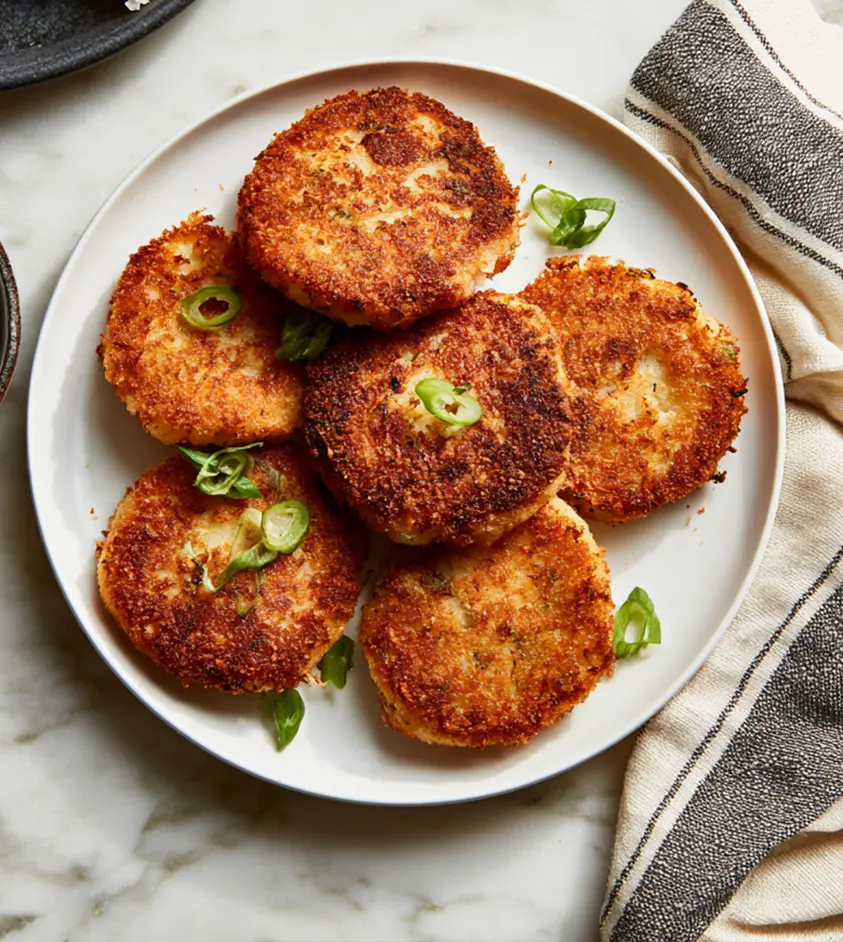
The concept is simple. Cold, leftover mashed potatoes are mixed with cheese, herbs, and a few binding ingredients, shaped into thick patties, coated in breadcrumbs, and pan-fried until golden brown. The result is a dish that works equally well as a hearty breakfast, a satisfying side, or a light lunch alongside a simple salad. It’s especially popular after big holiday meals like Thanksgiving, when mashed potatoes tend to pile up in the fridge, but there’s no reason to save it for special occasions. Anytime you’ve made a bit too much mashed potato, this is the recipe to reach for.
What makes this dish stand out from a basic potato cake is the addition of sharp cheddar cheese, fresh scallions, and parsley, which give it bright, savory flavor rather than tasting like plain reheated potatoes. A hint of cayenne pepper adds warmth without overwhelming heat, and the whole thing gets a crunchy exterior thanks to panko breadcrumbs.
Ingredients
This recipe comes together with about ten pantry-friendly ingredients:
- Leftover mashed potatoes – roughly 2 cups. It’s important that they’re chilled leftovers, not freshly made mashed potatoes, since the cooling process firms them up and helps the pancakes hold their shape.
- Shredded cheddar cheese – around ⅔ cup, for richness and a slightly nutty flavor.
- Scallions (green onions) – about 3, chopped, plus extra for garnishing.
- Fresh parsley – roughly ¼ cup, chopped, for a burst of herbal freshness.
- One large egg – acts as the binder that holds everything together.
- Onion powder – about half a teaspoon, for deeper savory flavor.
- A pinch of cayenne pepper – optional, but adds a subtle kick. Leave it out if you prefer a milder pancake.
- All-purpose flour – around half a cup, which helps bind the mixture along with the egg.
- Panko breadcrumbs – about ¾ cup, used to coat the outside for that satisfying crunch.
- Avocado oil – for frying, since it has a high smoke point.
- Sour cream – for serving on top.
Notably, this recipe skips extra salt and pepper in the mixture itself, since your original mashed potatoes should already be seasoned. It’s better to taste and adjust seasoning after the pancakes are cooked.
How to Prepare
Making these pancakes is a straightforward, three-step process.
Step 1: Mix the batter. In a large mixing bowl, combine the leftover mashed potatoes, cheddar cheese, scallions, parsley, egg, onion powder, and cayenne pepper. Stir until evenly combined, then fold in the flour just until incorporated. Overmixing at this stage can make the pancakes dense, so stop as soon as the flour disappears.
Step 2: Shape and coat the patties. Spread the panko breadcrumbs in a shallow dish. Using about a quarter cup of the potato mixture per pancake, form thick patties with your hands. If the mixture feels too sticky or loose to work with, pop it in the refrigerator for 20 to 30 minutes to firm up before shaping. Once formed, press each patty into the panko so it’s coated on both sides, then flatten it slightly to about half an inch thick.
Step 3: Pan-fry until golden. Heat a cast-iron or heavy-bottomed skillet over medium heat and coat the bottom with avocado oil. Add the patties in a single layer, working in batches if your pan isn’t large enough to fit them all at once. Use a spatula to press down gently on each pancake so the bottom makes full contact with the hot pan. Cook for about 2 to 3 minutes per side, until both sides are deeply golden and the cheese inside has melted.
Once cooked, season with a little extra salt if needed, then top with a dollop of sour cream and a sprinkle of fresh scallions or chives before serving.
Why You’ll Love It
There’s a lot to appreciate about this recipe beyond just being a clever way to avoid food waste. First, the texture contrast is genuinely satisfying: a crisp, crunchy panko shell gives way to a soft, fluffy potato center studded with melted cheese. It’s comfort food with a bit of extra crunch.
Second, it’s incredibly quick. From start to finish, the whole process takes about 30 minutes, most of which is hands-on but simple. There’s no complicated technique involved, so it’s approachable even for less experienced cooks.
Third, it’s flexible. Because the base is already-cooked mashed potatoes, you can easily adjust the mix-ins to whatever you have on hand. Swap the cheddar for a different cheese, use chives instead of scallions for a milder onion flavor, or add a drizzle of hot honey or hot sauce for extra kick, as some home cooks have discovered. It also adapts well to gluten-free diets by simply swapping the flour and panko for gluten-free versions.
Finally, it turns something that might otherwise get tossed into a genuinely craveable dish. Instead of eating the same mashed potatoes twice, you get a completely new eating experience, crispy, cheesy, and perfect for dipping in sour cream or a spicy aioli.
Tips
- Use truly cold, leftover mashed potatoes. Freshly made mashed potatoes tend to be too loose and won’t hold their shape as well once fried.
- Chill the mixture if needed. If your potato mixture feels too wet or sticky to shape into patties, refrigerating it for 20 to 30 minutes makes a big difference.
- Don’t skip the flour and egg. Together, they’re what keeps the pancakes from falling apart in the pan, especially if your mashed potatoes were on the drier or looser side.
- Watch your heat. Medium heat is key. Too high, and the panko will burn before the inside heats through; too low, and you won’t get that deep golden crust.
- Get creative with toppings. A spoonful of sour cream mixed with a bit of chipotle or adobo sauce makes a fantastic dipping sauce, and it works well beyond just this recipe.
- Store and reheat properly. Leftover pancakes keep well in an airtight container in the fridge for up to three days. Reheat them in an air fryer, a 350°F oven, or a skillet with a touch of oil to bring back the crispy exterior — microwaving will leave them soggy.
- Freeze extras after cooking. If you end up with more pancakes than you can eat, freeze them once fully cooked, then reheat directly from frozen in the air fryer for the best texture.